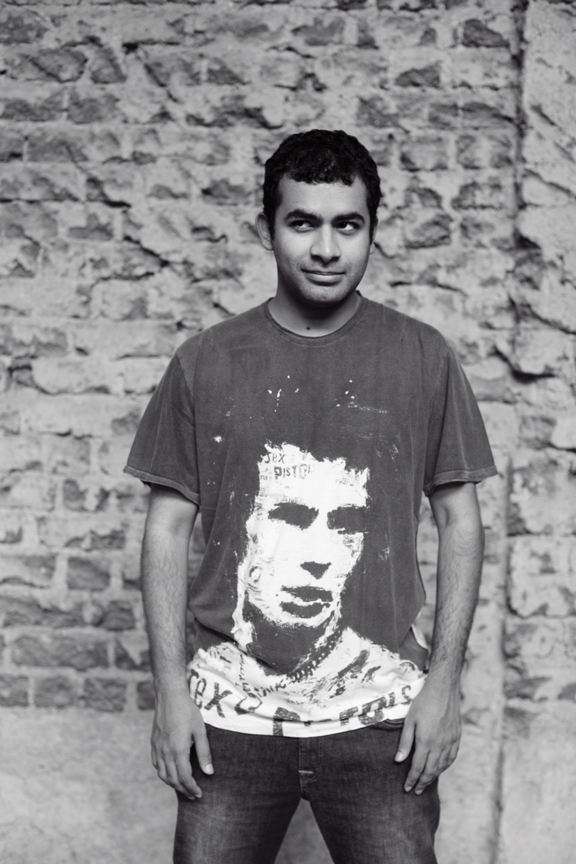
YOUTH INC CATCHES UP WITH VIJAY NAIR, FOUNDER OF MUSIC MANAGEMENT FIRM OML, TO TALK ABOUT THE INDEPENDENT MUSIC SCENE IN INDIA AND HIS ENDEAVOURS TO POPULARISE IT
I had worked with Gigpad before [early 2000s], which was an online portal for musicians, so I had an idea of what was going on. There was a band called AFS. They had asked me if I liked to manage them and in three months I started managing them. I just figured that this is something that I want to do and if I really wanted to do it well, I needed to do it full-time. At that point I just wanted to do that for a year, so my plan was I was going to restrict college for a year and then go back to it, which never ended up happening. I thought my folks would be resistant but they were pretty cool about it. They said, if that’s what I wanted to do… as long as I finish my degree at some point of time, which eventually didn’t happen, but in the next couple of years they saw that I was doing it pretty seriously and it was turning into something, so they never really complained about it.
In the early days, what kind of challenges did the independent music scene throw at you?
There was a lot. I think the basic thing was that not many people were happy to speak to managers. They were used to [speaking to] artists directly, so they didn’t really want to speak to a third person. At that point of time you didn’t have big festivals or big clubs. I think the basic infrastructure problems have always been around. The biggest difference was you’d have very few bands that would play their own music. Most of them would do covers. I think that was the big challenge.
Since commercial music in India has for a long time been dominated by Bollywood music, how difficult was it for independent music to gain more acceptance?
I don’t think it was any different from now. Bollywood music is as relevant now as it was back then. I don’t think we were ever competing with Bollywood. It was about building up the independent scene. The majority of people we cater to right now are people who would watch Bollywood movies and Bollywood songs, but would also come to NH7 Weekender. Back then, all we had to do was get the scene organised – [getting] more managers, getting gigs organised, getting people to pay [for] these bands, getting good music out in a proper way. And the Internet was really changing things around back then, so you use that in a way to kind of make it all direct rather than having people in between. It was just about getting organised.
How did OML come about?
I think it was a year, six months after I had started managing bands, I thought I needed a name. Initially the plan was me and Vishal [Dadlani] from Pentagram, we were planning to start a label. We decided to call the label Only Much Louder – that’s how it happened – but when I knew I wanted to do something for a long period of time, the name came up.
I believe there’s an interesting story behind that name, Only Much Louder.
Not so much, actually. We were looking for a new name for Pentagram because they were going to play in the States, and there was already a band called Pentagram there. So we were flipping through a magazine and I saw a speaker ad which saw ‘Now available only much louder’ and that seemed like a good name; I liked it and it defined what I did back then, which was rock music, so Only Much Louder made sense.
Did you have a Plan B in case OML didn’t work out?
I’ve never had a Plan B now. Plan Bs just don’t work. Just keep doing what you’re doing; it takes time and a lot of patience and it’s about how to make it work, so no point of having a Plan B.
Today OML has a music festivals wing, TV production arm, an online music and subculture magazine, and an online music store. Is there more expansion to this empire in the offing?
It’s a pretty small empire. I don’t think you can call it an empire yet. I still cater to about a million people in the whole country so that’s hardly any kind of market share. We don’t really plan expansions. We just do what makes sense. When we wanted to get an artist on television, a production house made sense. When we wanted stages to play, running our own festival made sense. Similarly, now, taking the festival to multiple cities, most cities, I think that’s a priority. We’ve added Calcutta this year.
When you look at the independent music scene today, do you feel proud that you had a big hand in making it what it is?
I think I’ve just had a hand, I don’t know if it’s big or small. I think we’ve definitely helped in making it an organised business. It’s not that we’re doing it as a hobby. Investors and people from outside [are] saying, ‘You know, there’s an opportunity there,’ – I think that’s a good thing. I think that way we’ve played a pretty important role [in] establishing a business. The scale of it is so big that it’s become more interesting – lot more things to do, lot more cities to reach out to, and if you’re a really good artist, it takes about maybe a year and a half to two to reach out to the audience as opposed to ten. So that’s a pretty good place to be.
One-on-one with Vijay Nair
• Favourite band/artist to have managed: AFS because it was the first band I managed and it got me into the entire thing. Swarathma has a special place because they’re probably the hardest working band I’ve worked with ever.
• Music in India in the next 5 years will be… I have no idea for the next 5 months!
• This year’s NH7 Weekender is going to be… The best experience so far. We just announced that we’re going to do just 9000 tickets which changes everything drastically because we’re focusing on rewarding the fans who have been with us since year one.
• One artist you want to bring to India: I’m superstitious. I’ll never say which artist I want to bring to India.
• One Indian artist you want to take abroad: Dualist Inquiry is someone I really want to take abroad.
• When you’re not working, you are…possibly just chilling at home, absolutely not getting out.
Volume 3 Issue 3
The Crossword Book Awards returned this week for its 19th edition, honouring the stories and…
The HECI Bill, 2025 is a major reform package that seeks to replace India’s multiple…
India’s labour system just got a major shake-up. Until now, rules for workers and labourers…
Every year on December 1st, the world observes World AIDS Day, and the statistics tell…
Waves 2025 arrived with colour, sound, and an atmosphere that filled every corner of the…
BITS Pilani’s annual cultural festival Oasis 2025 concluded on November 11 after four days of…